
The intersection of online gaming and education has given rise to an innovative approach known as gamification, which revolutionizes the learning process. By integrating game elements and mechanics into educational activities, gamification makes learning engaging, interactive, and enjoyable. The milyon88 offers a range of payment options, making it convenient for gamers to top up their accounts. In this article, we will explore how online gaming and gamification are transforming education and empowering learners of all ages.
The Power of Gamification
Gamification harnesses the power of games to create a motivational and immersive learning environment. By incorporating elements such as points, levels, badges, leaderboards, and rewards, gamification makes learning feel like a game, capturing learners’ attention and motivating them to actively participate.
This approach taps into the natural human inclination towards challenges, competition, and achievement. It transforms traditionally passive learning experiences into interactive journeys, fostering a sense of achievement, progress, and a desire for mastery.
Engaging and Interactive Learning Experiences
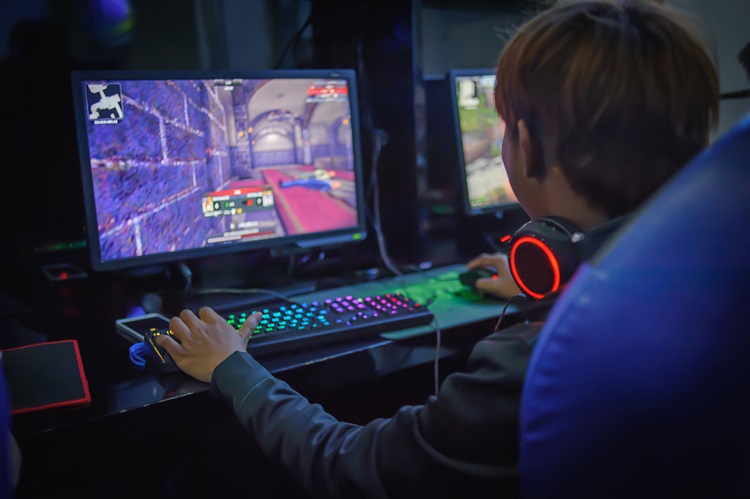
Online gaming and gamification provide learners with engaging and interactive experiences that captivate their interest and enhance their retention of knowledge. Instead of passively consuming information, learners actively participate in challenges, simulations, quests, and problem-solving activities.
Gamified learning experiences often offer immediate feedback, allowing learners to assess their performance and make adjustments in real-time. The interactive nature of gamification promotes critical thinking, decision-making, and problem-solving skills, empowering learners to apply their knowledge in practical contexts.
Personalized Learning Paths
Gamification allows for personalized learning paths tailored to each learner’s pace, preferences, and abilities. Through adaptive algorithms and progress tracking, gamified platforms can provide personalized recommendations, adaptive difficulty levels, and targeted learning content based on learners’ performance and progress.
This individualized approach ensures that learners receive content and challenges that are relevant and appropriate for their skill level, maximizing their engagement and learning outcomes. Learners can progress at their own pace, experiencing a sense of accomplishment as they overcome challenges and achieve milestones.
Collaboration and Social Learning
Online gaming and gamification foster collaboration and social learning, enabling learners to connect, communicate, and collaborate with peers. Multiplayer gamified experiences often require teamwork, cooperation, and communication to achieve shared goals.
Through cooperative gameplay, learners develop interpersonal skills, teamwork abilities, and effective communication practices. They learn to collaborate, negotiate, and solve problems together, fostering a sense of community and promoting a supportive learning environment.
Continuous Progress and Mastery
Gamification promotes a growth mindset by emphasizing continuous progress and mastery. Learners are encouraged to set goals, track their progress, and strive for self-improvement. They experience a sense of achievement as they unlock levels, earn badges, or climb leaderboards, reinforcing a growth-oriented mindset.
This focus on continuous progress and mastery cultivates resilience, perseverance, and a willingness to embrace challenges. Learners develop a sense of ownership over their learning journey, building confidence in their abilities and a passion for lifelong learning.
Real-World Applications and Simulations
Gamification allows learners to apply their knowledge and skills in real-world contexts through simulations and interactive scenarios. Virtual environments provide a safe space for learners to practice decision-making, problem-solving, and critical thinking in realistic situations.
Simulations can replicate complex scenarios in fields such as business, healthcare, engineering, and more. Learners can experiment, make choices, and witness the consequences of their actions, gaining valuable insights and practical experience.
Conclusion
Online gaming and gamification have revolutionized education by transforming the learning experience into an engaging, interactive, and personalized journey. By incorporating game elements, educators can capture learners’ attention, foster motivation, and enhance knowledge retention.
Gamification promotes collaboration, critical thinking, and problem-solving skills while cultivating a growth mindset and a love for lifelong learning. It empowers learners to actively participate in their education, making the learning process enjoyable, immersive, and impactful.
As technology continues to advance, online gaming and gamification will play an increasingly significant role in shaping the future of education, unlocking new possibilities for interactive and effective learning experiences.
Leave a Reply